Before there was a name for what this region was becoming, there was already exchange. Stones moving through hands. Techniques absorbed, transformed, and passed forward.
Scroll to beginNot "inspired by Peranakan heritage." The evolutionary stage before Peranakan. The missing chapter in Southeast Asian jewellery history — the moment before Greek filigree, Arab merchant aesthetics, Indian Mughal influence, and early Chinese Straits culture synthesised into what we now recognise as Peranakan.
Each piece name is drawn from Kamus Dewan — the authoritative Malay dictionary published by Dewan Bahasa dan Pustaka. The etymology, proverbs, and philosophical weight embedded in each name are not invented. They were excavated.
Embun → Fajar → Laut → Cahaya → Selubung → Saga → Kerawang
Dew → Dawn → Sea → Light → Veil → The Scarlet Seed → Openwork
A cosmological sequence. A complete journey.
"The Gilded Straits does not recreate a lost world.
It inhabits the moment before that world had a name."
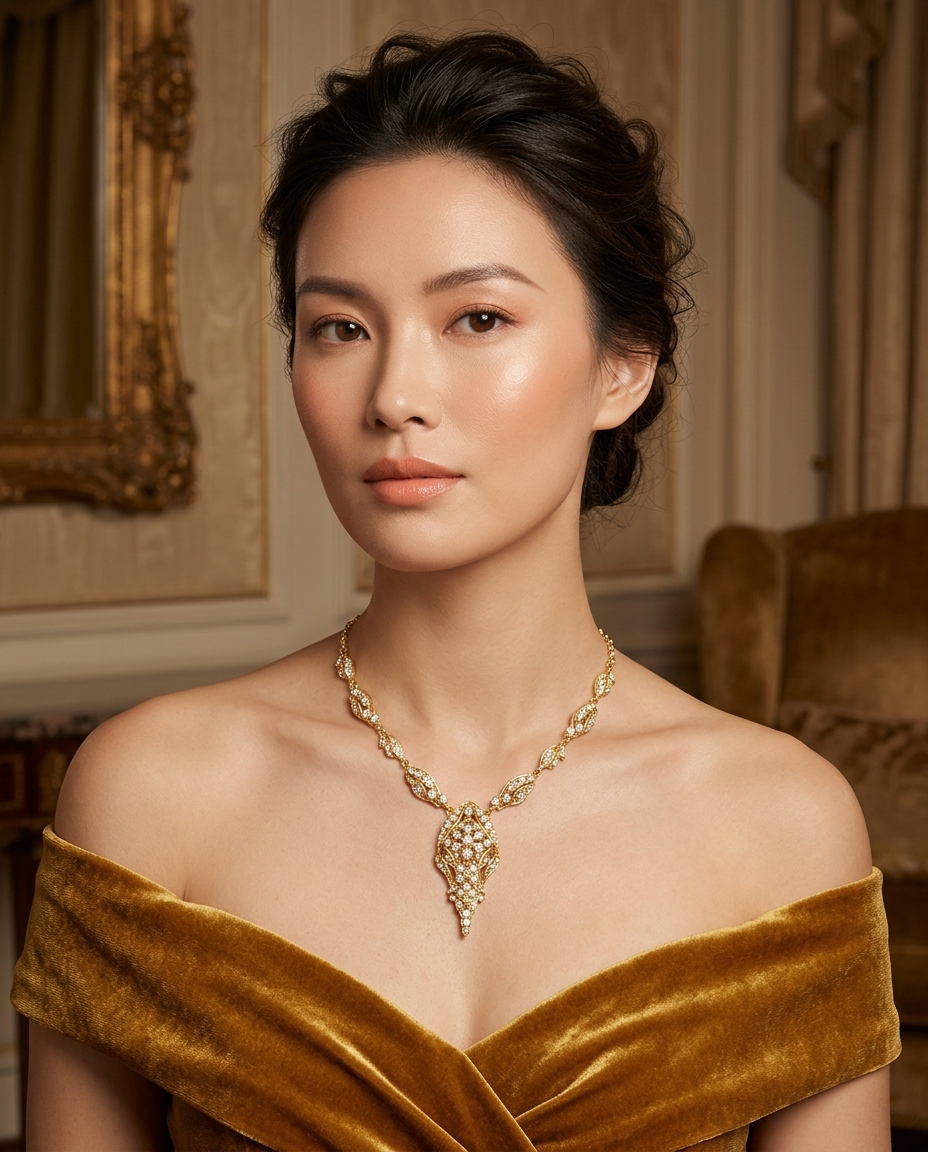
Embodiment of Morning Dew
Part of a set with Lencana Embun · Available separately
In Malay, embun is morning dew — water vapour that descends in the night, gathers on leaves by dawn, and disappears before 7am.
We disagreed.
Titisan — not a drop, but an embodiment. This is the dew made permanent. One falls. Both endure.
Emblem of Morning Dew
Part of a set with Titisan Embun · Available separately
Lencana — an emblem worn at the chest, a declaration of belonging.
Where Titisan falls, Lencana marks. The pendant embodies. The earrings declare.
Worn together: the complete argument against impermanence. One falls. One marks. Both endure.
Embun → Fajar
The Gem of Dawn
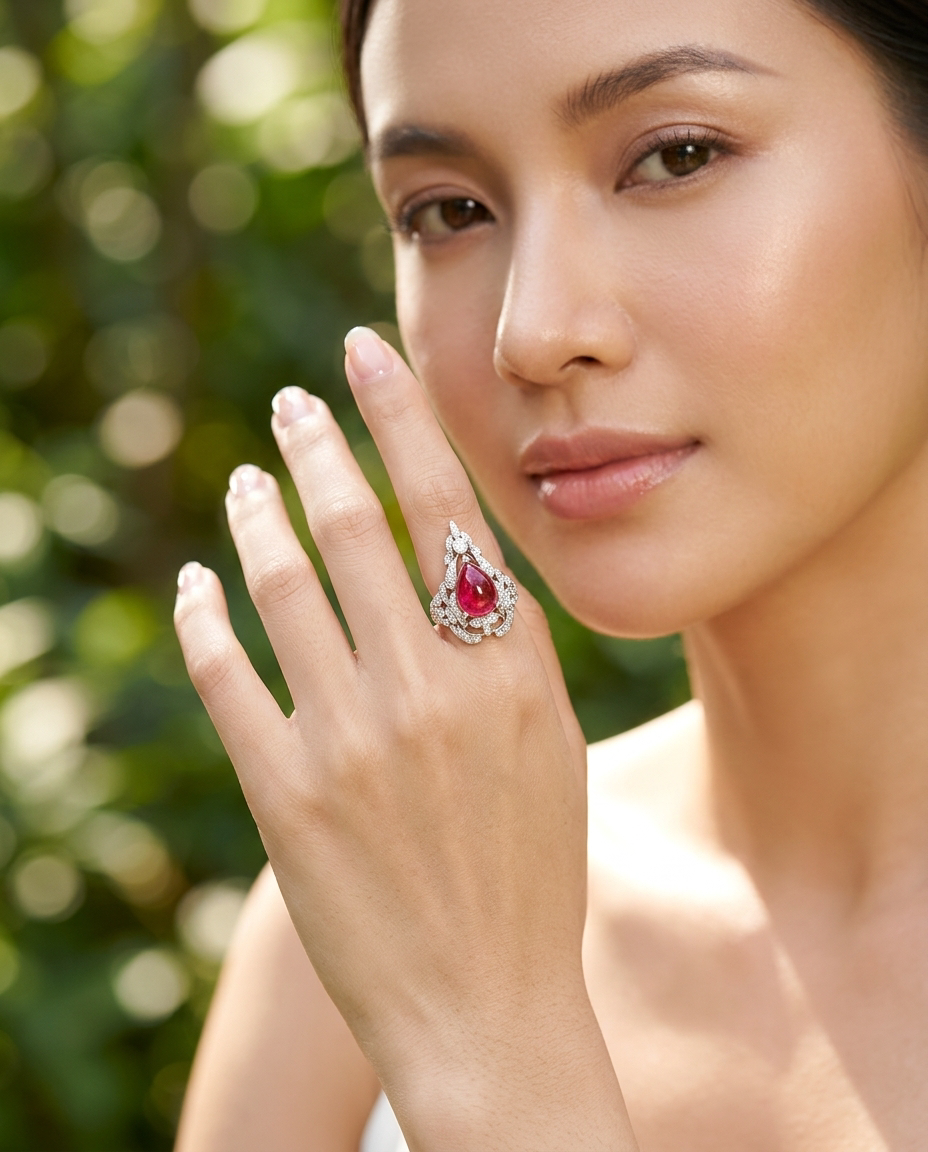
Fajar. The redness in the eastern sky before the sun appears.
Not sunrise. The moment before.
This stone is rubellite tourmaline — 3.45ct, pear cabochon, the specific crimson of pre-dawn horizon. We did not choose the name after the stone. We did not choose the stone after the name. They found each other.
This is how we make things.
Fajar → Laut
The Shimmering Sea
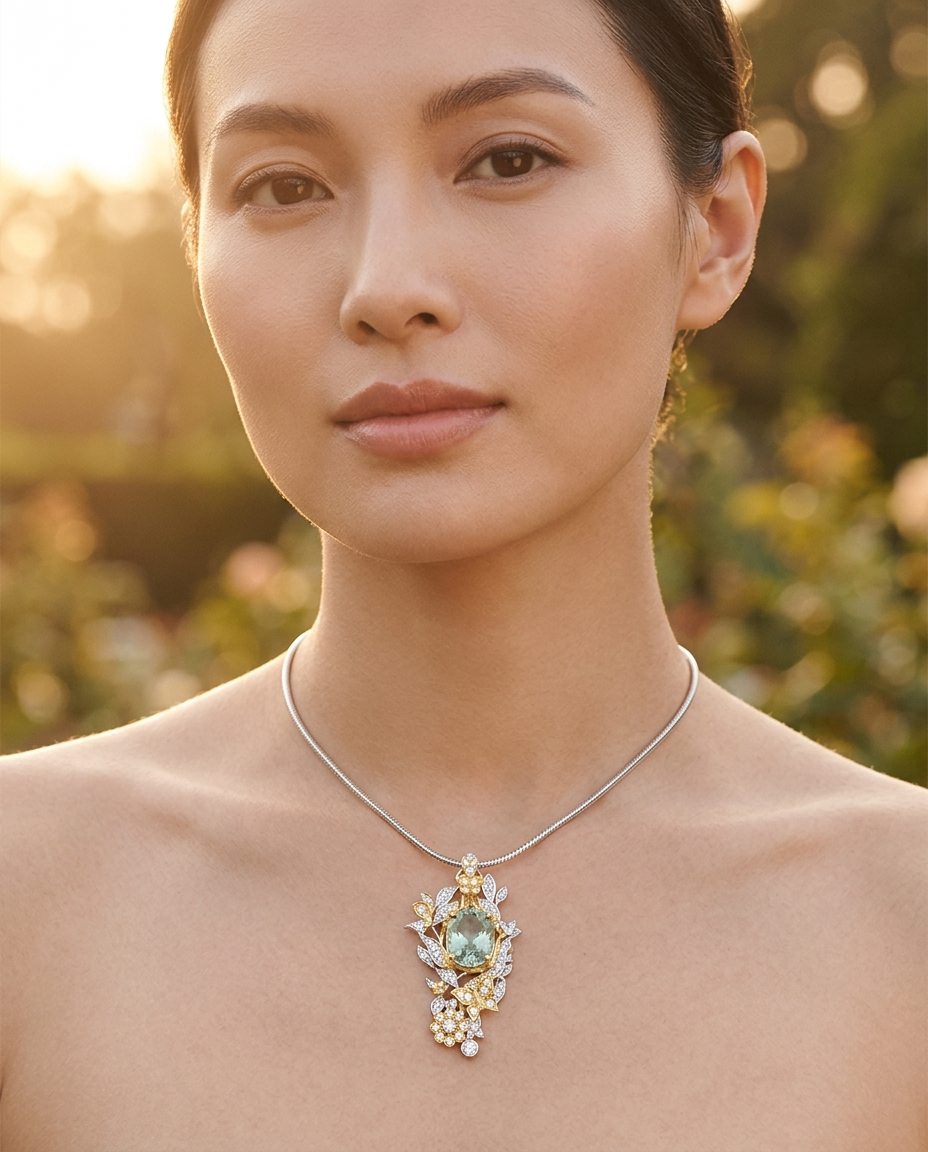
This sapphire photographs green. In hand it is blue. On the chain it becomes the sea at the hour when you cannot decide if the water is green or blue and it does not matter because it is both and it is everything.
Laut → Cahaya
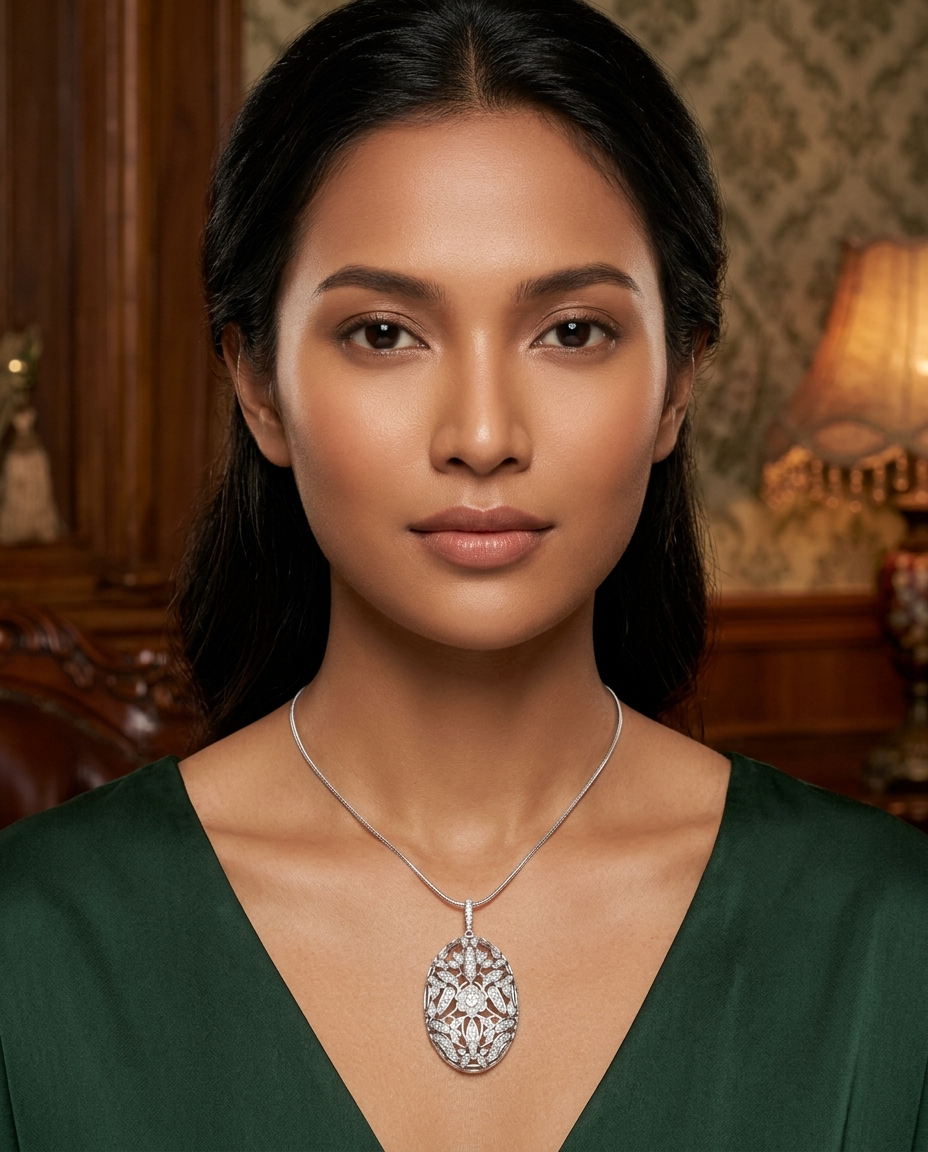
The Door of Light
Paired with Jendela Cahaya · Available separately
Light needs a way in. This is the door we made for it.
The lattice is not decoration. It is architecture — open filigree that does not block light but frames it, channels it, gives it direction.
The Window of Light
Paired with Pintu Cahaya · Available separately
One walks through a door. One looks through a window.
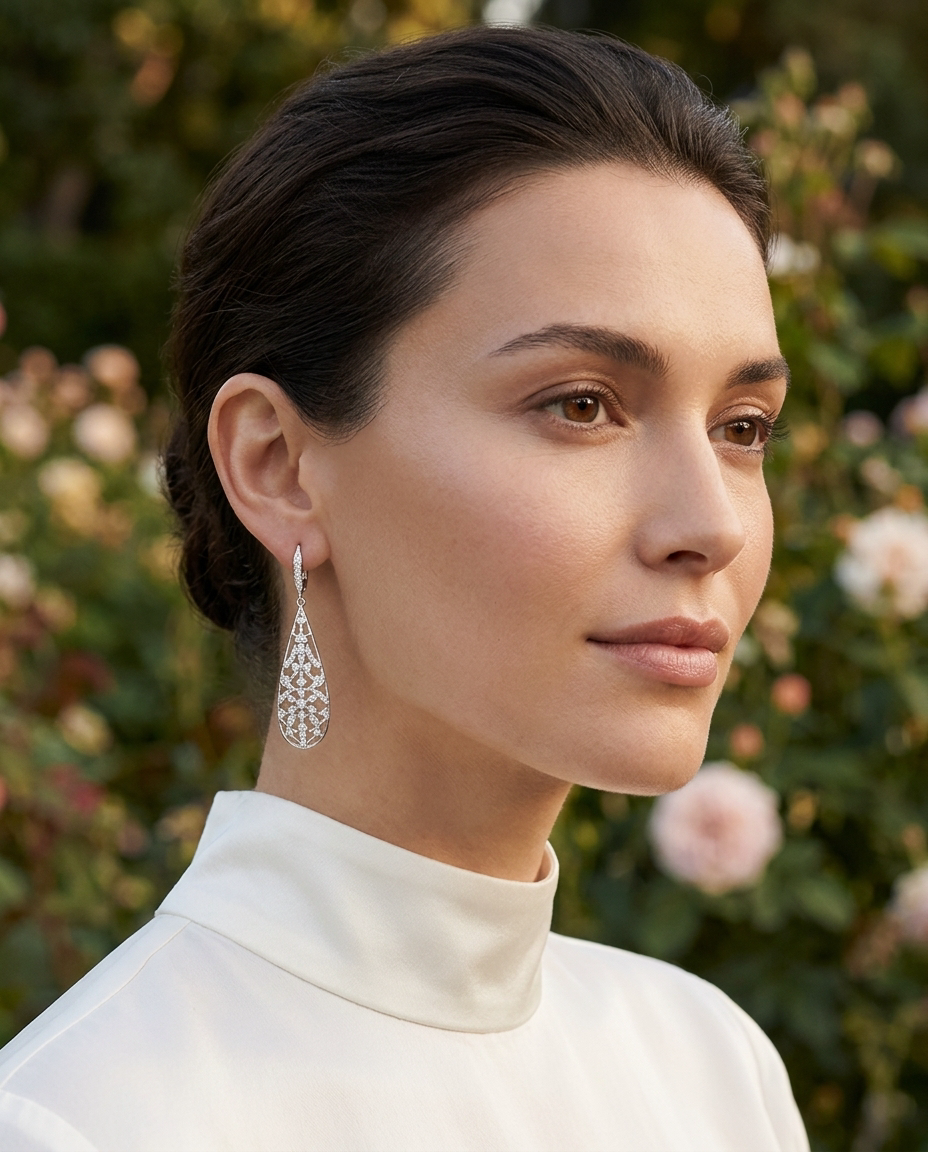
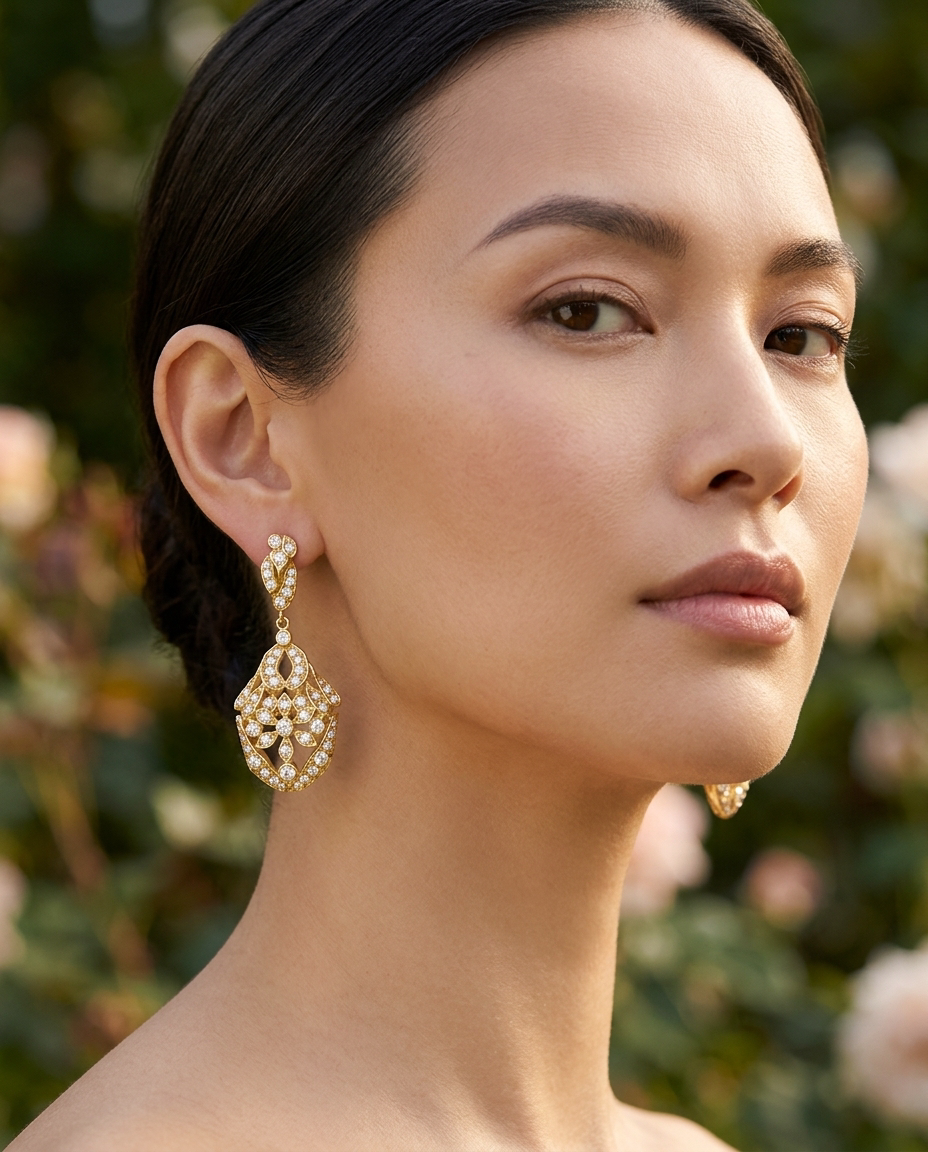
These are the earrings — the windows. Worn at the face, framing light at the point where it is most visible: the eyes, the jaw, the turning of a head.
Cahaya mata. The light of the eye. In Malay, this also means: beloved.
Cahaya → Selubung
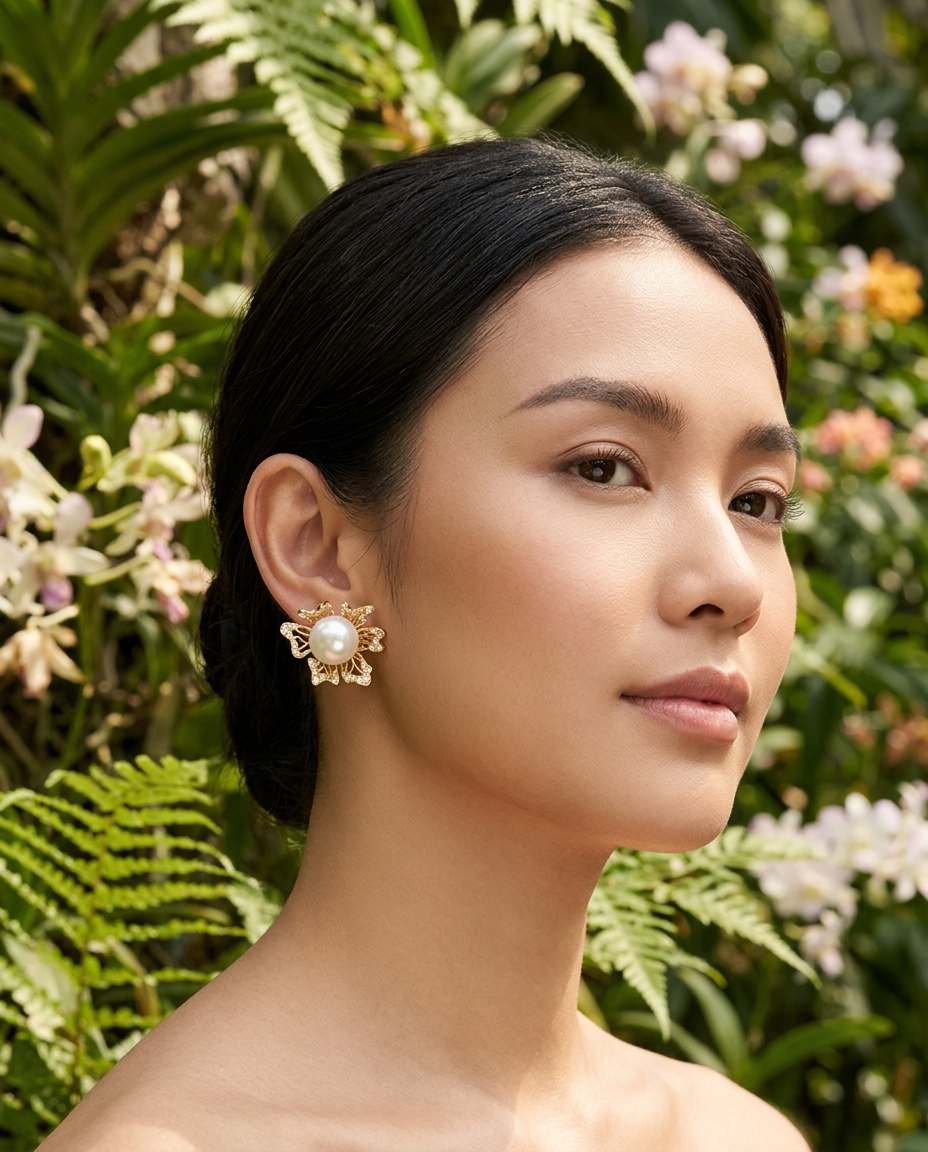
The Veil of the Pearl
The jacket removes. Wear the pearl alone — present, unadorned, enough. Or wear the veil — the gold filigree that frames without hiding, that declares without overwhelming.
Two pieces. One decision. Every morning.
Selubung → Saga
The Scarlet Seed
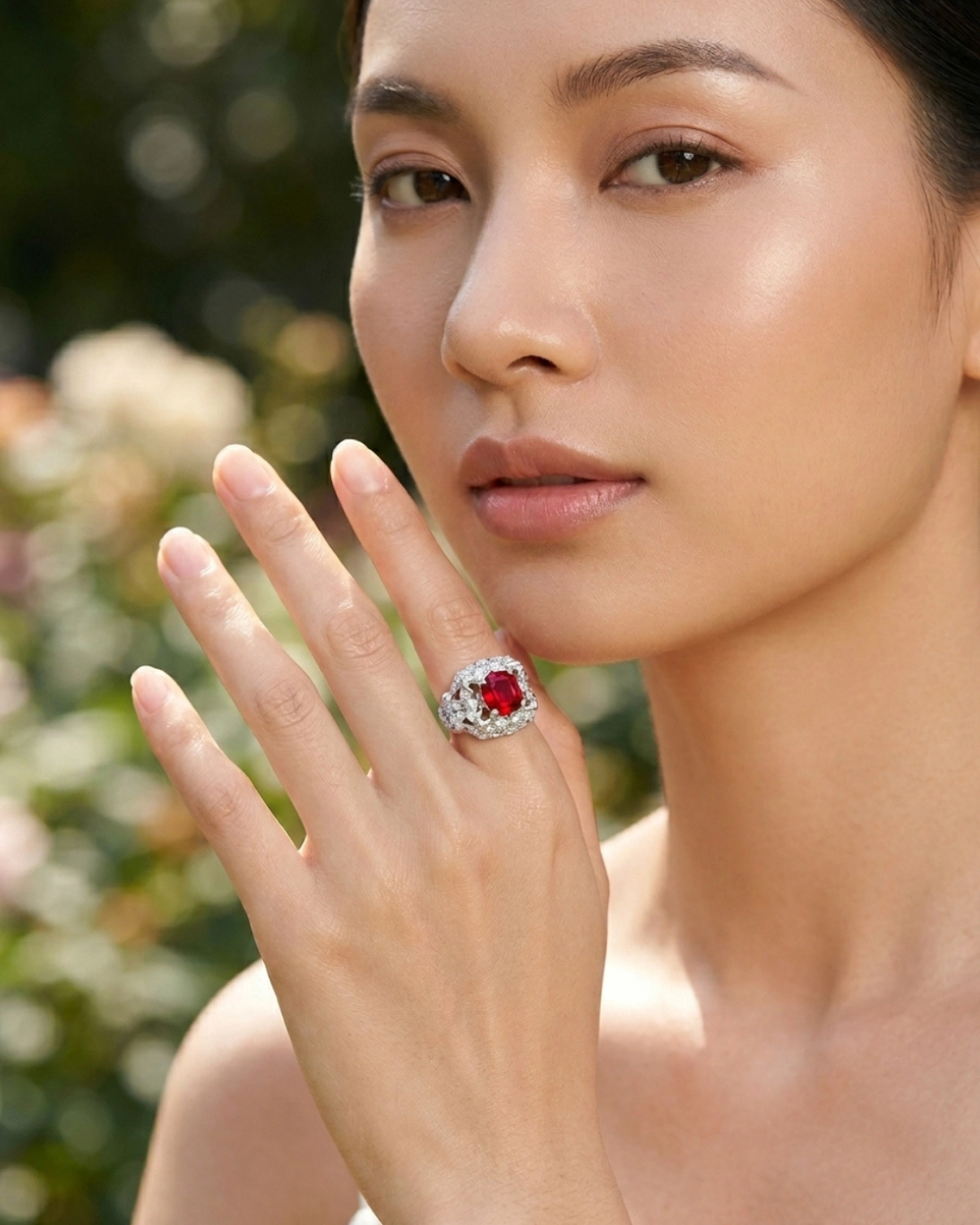
The walls and ceilings of Shah Cheragh in Shiraz are covered in aineh-kari — Persian mirror mosaic, thousands of fragments set to catch and multiply light until the chamber dissolves into radiance. This ring is our answer to that ceiling: not a technical claim, but a reading of it. What happens when you stand beneath Shah Cheragh and then go to the bench.
The stone at its centre traveled the same trade routes as that technique. Red spinel from the Mogok matrix — the stone that Mughal emperors inscribed with their names and called ruby for five centuries. For that long, no science existed to separate them. They shared a name, a price, an imperial provenance.
The stone did not change. The name did. Saga was already the right word.
Saga → Kerawang
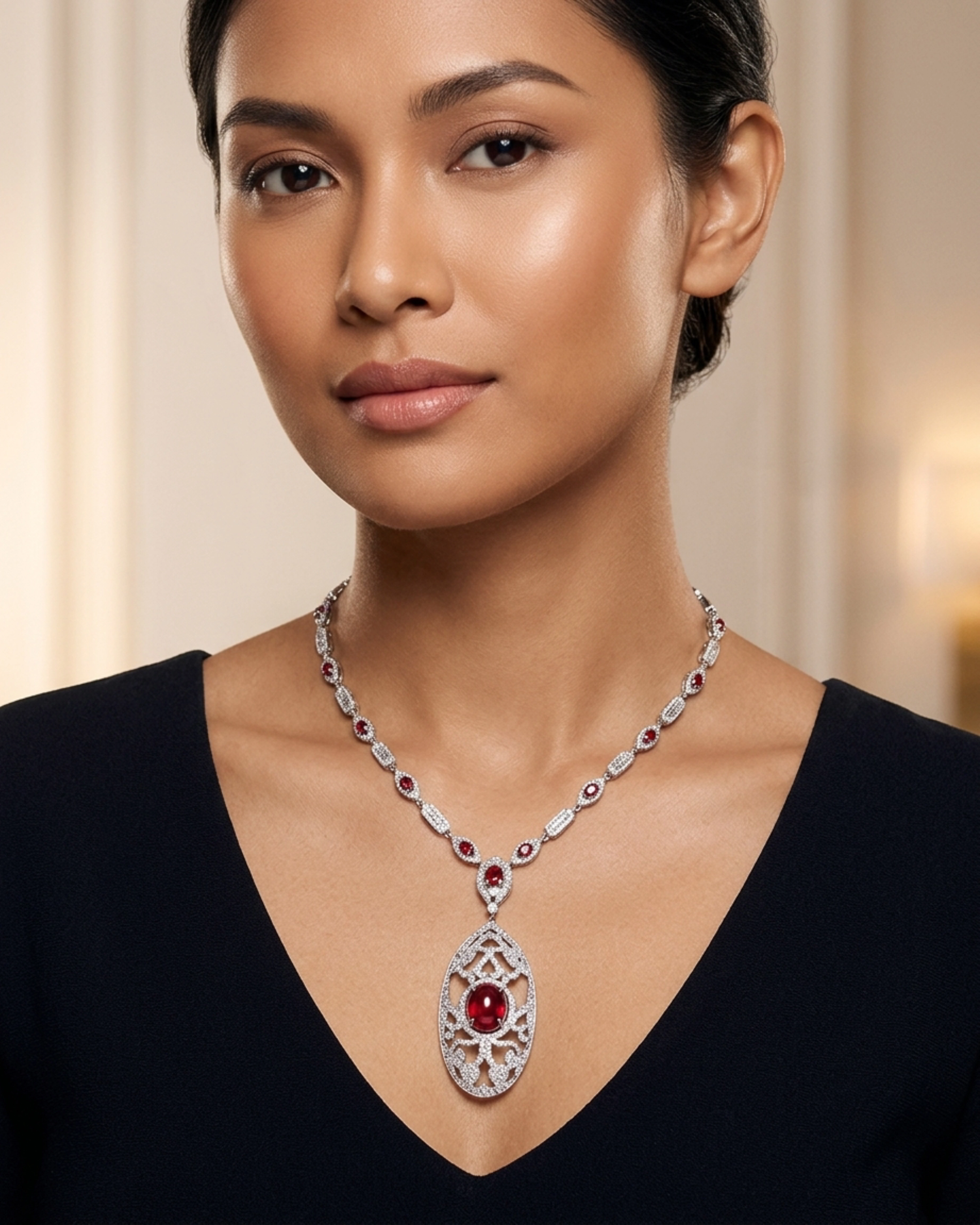
The Openwork
What remains is the design. What is taken away is equally the design.
The cloud scroll. The organic arabesque. The discipline of Chinese craftsmen who settled along the Straits: that negative space is not absence. It is the other half of the composition.
At the centre: rubellite tourmaline, cabochon. Deep crimson, held whole. The chain carries spinel and tourmaline in the same red register.
The openwork does not decorate. It breathes.